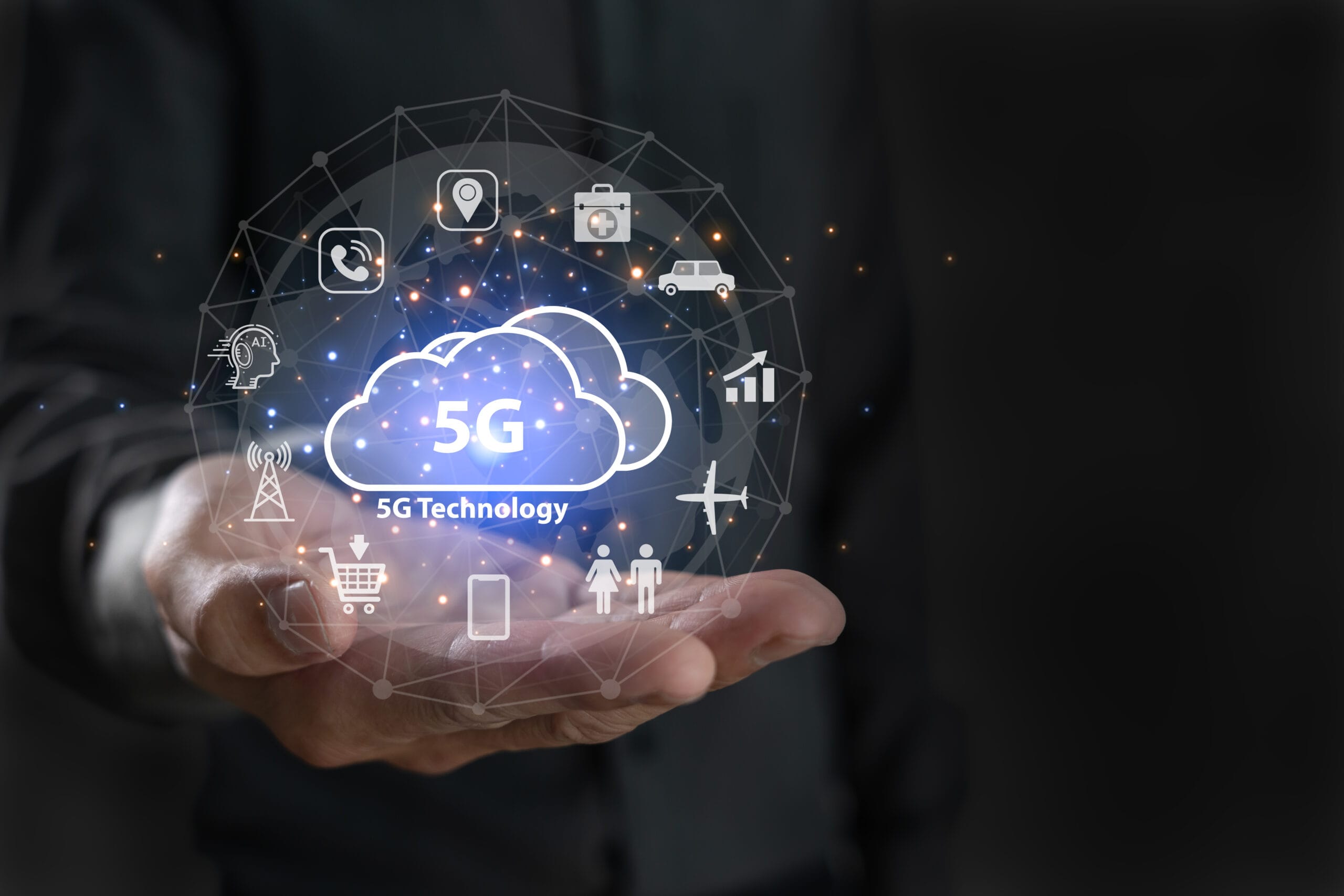
The arrival of 5G—the fifth generation of wireless communication technology—marks the beginning of a new era. This isn’t just an upgrade from 4G; it’s a transformative force that’s reshaping how industries operate and consumers interact with technology. With capabilities like ultra-fast speeds, near-zero latency, and the ability to connect billions of devices seamlessly, 5G is set to redefine the boundaries of possibility.
According to reports, the global economic impact of 5G is expected to exceed $13.2 trillion by 2035, and industries worldwide are already feeling the ripple effects. Let’s dive deep into how this groundbreaking technology is revolutionizing our world.
The Core of 5G’s Power
To fully grasp the revolutionary potential of 5G, it’s essential to understand what sets it apart:
- Blazing Speeds: 5G offers data transfer rates up to 10 Gbps, making it 100 times faster than 4G. Tasks like downloading a full HD movie, which took minutes on 4G, can now be completed in under 5 seconds.
- Minimal Latency: With latency as low as 1 millisecond, 5G ensures real-time communication, a critical factor for applications like autonomous vehicles and telemedicine.
- Massive Device Connectivity: 5G can connect up to 1 million devices per square kilometer, enabling a seamless Internet of Things (IoT) ecosystem where devices communicate and work together intelligently.
These characteristics are the building blocks for innovations across industries and the consumer landscape.
Industries Transformed by 5G
1. Healthcare: A New Age of Precision and Access
5G is revolutionizing healthcare, breaking barriers of geography and time. With ultra-low latency and high-speed connectivity, 5G enables:
- Remote Surgeries: In 2019, a surgeon in China successfully performed a gallbladder operation remotely using a 5G connection, demonstrating its potential for precision and reliability in critical situations.
- Telemedicine Expansion: Real-time video consultations and diagnostics allow patients in remote areas to access quality healthcare.
- IoT in Healthcare: Wearable devices can continuously monitor patient vitals and transmit data instantly to healthcare providers.
Stat Insight: The global telemedicine market is projected to grow from $87.8 billion in 2021 to over $396 billion by 2027, with 5G as a significant enabler.
2. Manufacturing: The Smart Factory Revolution
Manufacturing is entering the era of Industry 4.0, driven by 5G-powered technologies:
- Predictive Maintenance: IoT sensors on machinery detect faults in real time, preventing costly breakdowns and reducing downtime.
- Automation: Autonomous robots connected through 5G work collaboratively, streamlining operations and increasing output.
- Digital Twins: Manufacturers can create virtual replicas of factories, testing and optimizing production processes without interrupting real-world operations.
Case Study: Ericsson’s smart factory in the U.S. uses 5G to connect automated vehicles, sensors, and robots, increasing efficiency by 30%.
3. Entertainment: Immersion Like Never Before
Entertainment is being redefined with the power of 5G:
- Augmented and Virtual Reality: Lag-free VR and AR experiences are transforming gaming, live events, and education. Gamers can now enjoy fully immersive environments, while sports fans can experience events from a 360-degree perspective.
- Streaming in Ultra HD: 5G supports uninterrupted 8K video streaming, enhancing the consumer viewing experience.
Stat Insight: The global AR/VR market, valued at $37 billion in 2022, is expected to surpass $114 billion by 2027, with 5G fueling its expansion.
4. Automotive: The Backbone of Autonomous Vehicles
Self-driving cars rely on real-time data exchange, and 5G delivers the ultra-low latency required for:
- Vehicle-to-Vehicle Communication (V2V): Cars communicate with each other to prevent collisions and optimize traffic flow.
- Smart Infrastructure: Integration with traffic lights, road sensors, and weather updates ensures safer journeys.
Stat Insight: By 2030, the autonomous vehicle market is projected to be worth $2.16 trillion, with 5G as a cornerstone.
5. Retail: Personalized Shopping Experiences
Retailers are leveraging 5G for cutting-edge experiences:
- AR Try-Ons: Consumers can virtually try on clothes or preview furniture in their homes.
- Smart Stores: Sensors and cameras powered by 5G offer personalized recommendations and automate checkout processes.
Example: Walmart has begun integrating 5G in its stores to create connected shopping experiences, including real-time inventory updates and dynamic pricing.
How 5G Empowers Consumers
5G is also enhancing daily life for billions of consumers:
- Seamless Connectivity: Buffering and lag are things of the past, with instant downloads and crystal-clear video calls becoming the norm.
- Smart Living: IoT devices such as smart thermostats, security systems, and appliances work together seamlessly, creating more efficient and sustainable homes.
- Revolutionized Gaming: Cloud gaming services like Google Stadia and Xbox Cloud Gaming run effortlessly on 5G, providing console-quality experiences on any device.
Stat Insight: By 2025, the number of connected devices is expected to reach 75 billion, driven by 5G infrastructure.
Challenges and Roadblocks
While 5G is transformative, its adoption comes with challenges:
- High Deployment Costs: Building 5G infrastructure requires significant investment. For example, the U.S. rollout alone is estimated to cost over $275 billion.
- Privacy and Security Risks: As 5G connects billions of devices, vulnerabilities increase. Robust cybersecurity measures are essential to protect data.
- Global Coverage Gaps: Rural and underserved areas may face delays in accessing 5G, widening the digital divide.
The Road to a 5G-Powered Future
The pace of 5G adoption is accelerating. By 2025, 40% of the world’s population will have access to 5G networks, fueling innovations we can only begin to imagine. Sectors such as education, agriculture, and public safety will also benefit immensely.
Businesses and governments must collaborate to ensure equitable access, address challenges, and unlock the full potential of 5G technology.
Conclusion: The Catalyst for a Connected World
5G isn’t just an upgrade—it’s the foundation of a new digital economy. From transforming industries to enhancing everyday consumer experiences, it is unleashing a wave of innovation that will define the next decade. Whether it’s powering precision surgeries, self-driving cars, or virtual realities, 5G is not just connecting devices—it’s connecting dreams, possibilities, and futures.
The 5G era has arrived. Are you ready to harness its power?